OpenAI is moving deeper into the hardware beneath its models. Instead of relying exclusively on processors designed for a broad market, it is helping create silicon around the workloads that power its own products. That is a significant change in responsibility: the company is no longer only a customer of computing infrastructure, but also a participant in defining it.

On June 24, 2026, OpenAI and Broadcom unveiled Jalapeno, OpenAI’s first custom inference accelerator. Reuters reported that the design had been sent to TSMC for manufacturing, with deployment planned by the end of 2026.
The title’s “first major LLM company” describes the significance of the move, not a verified industry-wide ranking. Google and other large technology companies developed custom AI processors earlier.
The central theme is co-design: aligning models, software, silicon, and systems rather than optimizing each layer separately.
Three Companies, Three Different Roles
The phrase “OpenAI’s chip with TSMC” can obscure the division of work.
OpenAI contributes the accelerator architecture and requirements informed by its models and products. Broadcom provides silicon implementation, networking, and integration capabilities. TSMC manufactures the silicon.
Celestica also participates through board, rack, and system expertise, according to the joint announcement.
This is not OpenAI becoming a foundry. It is OpenAI taking greater architectural ownership while relying on specialized partners to industrialize and manufacture the platform.
What Has Been Announced—and What Remains a Target
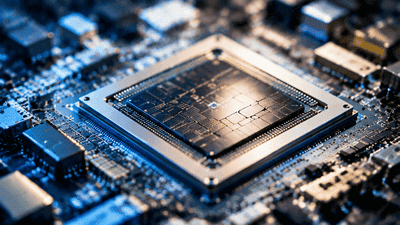
Jalapeno’s unveiling established a concrete product-development milestone.
OpenAI described it as the first accelerator in a multigeneration computing platform and targeted initial deployment by the end of 2026.
That announcement does not establish broad operational deployment, mature production yield, or a completed fleet expansion.
As of October 2026, the responsible distinction is between a disclosed design and its intended commercialization. Shipping components, commissioning systems, and serving production workloads require additional evidence.
Why an LLM Company Wants Its Own Silicon
A company operating a large AI service has unusually detailed knowledge of its workloads.
It can observe model behavior, memory use, serving patterns, and the performance requirements of its products.
Those observations can guide hardware priorities more precisely than a general market forecast.
For OpenAI, the opportunity is to turn that knowledge into an architectural advantage. The resulting chip need not be optimal for every customer; it needs to support OpenAI’s expected work well enough to justify the investment.
Inference Is the Commercial Starting Point

Training updates a model’s parameters. Inference runs the model to produce answers or other outputs.
Jalapeno was announced specifically around large-language-model inference rather than as a universal replacement for training infrastructure.
That focus matters because inference generates a recurring cost as services are used.
For a large operator, improvements in useful throughput or efficiency can accumulate across substantial volumes. A narrow optimization can therefore have major financial value even without solving every AI computing problem.
The Workload Is More Complicated Than “Generate a Token”
Language-model serving includes processing prompts, generating subsequent tokens, maintaining working state, and coordinating requests.
Different phases can stress computing resources and memory differently.
Longer contexts, larger models, and greater concurrency change the balance again.
A custom accelerator therefore needs to address the intended serving environment, not merely achieve a strong arithmetic result. The cost calculation depends on the complete request and the service requirements surrounding it.
Model Knowledge Can Shape the Hardware

OpenAI’s announcement says the design was informed by its model roadmap, kernels, serving systems, and product needs.
That is the core co-design proposition.
Engineers can prioritize the operations and data movement expected to matter most, while software teams adapt execution to the hardware’s strengths.
The advantage is not guaranteed. It depends on whether the model roadmap remains compatible with decisions made before the chip reaches production.
Customization Does Not Necessarily Mean Inflexibility
An application-specific integrated circuit can still be programmable within its intended domain.
Custom silicon can support different models or configurations without reproducing every capability of a broader processor.
The design challenge is deciding which flexibility is valuable and which adds unnecessary cost.
For OpenAI, the ideal result is specialization around durable workload characteristics. Optimizing too narrowly for one model could make the processor less useful when architectures or deployment strategies change.
The Reported Nine-Month Design Period Needs Context
Reuters reported that OpenAI’s engineers took roughly nine months to complete the chip design before sending it to TSMC.
OpenAI attributed part of that pace to using AI to accelerate selected aspects of the process.
That is an important development claim, but it does not mean a complete production platform was built from nothing in nine months.
Design completion, fabrication, validation, system integration, and volume deployment are separate stages. Accelerating one stage does not eliminate the others.
Do Not Invent the Missing Specification Sheet
A product announcement can explain architectural intent without disclosing every technical detail.
Unless confirmed, process node, die area, memory configuration, numerical formats, and measured performance should remain open questions.
TSMC’s involvement alone does not establish a particular manufacturing technology.
For readers and investors, restraint improves the analysis. A plausible specification derived from industry expectations is still an assumption, not a disclosed feature of Jalapeno.
Memory Will Remain Part of the Economics
Large models require space for weights and working data, along with enough bandwidth to keep computation productive.
Custom compute hardware cannot remove those requirements.
The chosen memory architecture influences power, packaging, cost, and the number of devices needed to support a workload.
For OpenAI, the value of customization depends partly on how effectively the platform manages data movement. More arithmetic capability provides limited benefit if memory becomes the limiting resource.
Broadcom’s Networking Role Is Strategically Important
The partnership extends beyond the accelerator itself.
The companies said the systems would scale using Broadcom’s Ethernet and other connectivity technologies. Reuters described that choice as an alternative to Nvidia’s InfiniBand-based networking approach.
That does not establish that every workload will perform better on Ethernet.
The significance is ownership of a complete system strategy. OpenAI and its partners are coordinating computing and networking rather than treating the processor as an isolated purchase.
The Ten-Gigawatt Plan Is a Deployment Ambition
In October 2025, OpenAI and Broadcom announced a collaboration covering 10 gigawatts of custom AI accelerators, with deployment targeted to begin in the second half of 2026 and finish by the end of 2029.
Gigawatts describe electrical scale, not arithmetic performance.
The figure should not be converted directly into chip counts or model-serving capacity without configuration and operating assumptions.
It is best understood as a substantial infrastructure objective whose realization depends on manufacturing, financing, power availability, and deployment execution.
Facilities Can Set the Pace
Completed accelerators need buildings, electricity, cooling, networking, and operational support.
Those resources can take longer to prepare than individual components.
A production milestone therefore does not guarantee that the corresponding capacity is immediately useful.
For the roadmap, system partners and data-center operators are essential. The deployment succeeds only when the hardware reaches an environment capable of sustaining its intended workloads.
Yield Determines the Cost of Accepted Hardware
Fabrication produces candidate dies, not uniformly saleable products.
Functional behavior, performance limits, power, and reliability determine acceptance.
Packaging and final testing introduce further requirements after the silicon is manufactured.
For OpenAI and Broadcom, the economic objective is dependable accepted output. No public design announcement can establish the mature yield of a product without supporting manufacturing data.
The Financing Story Is Separate from the Chip Story
Large deployment plans require capital for equipment and infrastructure before the associated services generate returns.
October 2026 reporting described early discussions concerning substantial financing for OpenAI’s custom-chip purchases, but reports differed on the potential amount.
That makes the existence of preliminary discussions more defensible than presenting one financing total as finalized.
For investors, financing completion, terms, and risk allocation need separate evaluation. A strong technical roadmap does not automatically establish that every planned purchase is funded.
Custom Silicon Does Not End GPU Procurement
A company can adopt its own inference accelerator while continuing to use merchant GPUs.
Different hardware can serve different models, phases, or deployment requirements.
Existing software investments and capacity needs also influence the transition.
For OpenAI, the strategic benefit is another computing option and greater influence over future development. It need not replace every GPU to provide meaningful value.
The Software Stack Determines Whether Savings Reach Production
A custom processor requires compilers, libraries, runtime support, diagnostics, and deployment tools.
Models must execute correctly and use the architecture efficiently.
Operational teams also need to manage failures and updates without disrupting services.
This can consume substantial engineering resources. The business case becomes stronger when the hardware advantage remains meaningful after those costs and responsibilities are included.
Cost per Token Is Not Enough on Its Own
Token costs depend on model quality, numerical precision, prompt length, output length, concurrency, and latency requirements.
A comparison can look favorable while measuring different work.
Infrastructure utilization and the cost of retries also influence the result.
For commercial assessment, the stronger metric is cost per useful outcome under equivalent requirements. Claims of savings should be evaluated against that complete framework rather than treated as universal product facts.
What Would Confirm the Program Is Working?
The most useful indicators connect development with sustained operation.
- Confirmed deployments beyond the initial design unveiling.
- Measured performance under clearly defined workloads.
- Reliable manufacturing and delivery progress.
- Competitive total cost at realistic utilization.
- Model support aligned with OpenAI’s evolving products.
- Facilities and networking ready for expansion.
- Financing commitments distinguished from preliminary discussions.
- A successful transition to subsequent processor generations.
Together, these measures would demonstrate that architectural ownership is creating durable operating value.
The Bigger Shift Is Vertical Coordination
OpenAI’s custom-chip program brings a model developer closer to the decisions that determine computing performance and cost.
TSMC manufactures the silicon, Broadcom helps implement and connect it, and system partners turn the components into deployable infrastructure.
The significance is not that OpenAI has become a semiconductor manufacturer. It is that model development and hardware design are being coordinated more directly. The lasting verdict will come when that coordination produces dependable, economical AI services at scale.